AI-Driven Anomaly Detection for Enhanced Business Process Orchestration
Demonstrates anomaly detection using a multi-level Business Process Orchestration framework aligned with the current technology landscape.
AI Engineer · Security Practitioner · Cloud Architect
Senior engineering leader with 14+ years designing secure, AI-driven enterprise systems at scale. Holder of 4 granted US patents with 7 more under review, author of Sustainable Enterprise Integration, and published researcher at IEEE, ACM, and Springer.
About
Sagar Gupta is a leading AI engineer, security practitioner, and cloud architect with over 14 years of experience designing and delivering transformative technology for enterprise environments worldwide.
Renowned for his ability to architect secure, scalable systems, he specialises in integrating artificial intelligence with business-critical software, championing best practices in cybersecurity and cloud strategy. His career spans global enterprises and high-growth startups, where he has consistently delivered at the intersection of innovation and operational excellence.
Sagar is a frequent speaker at industry conferences and an advocate for ethical AI, sustainable software development, and open-source security practices. He mentors engineers and contributes to the broader tech community.
Enterprise-scale AI integration, LLMs, anomaly detection, predictive analytics, and responsible AI deployment.
Security architecture for cloud-native and hybrid environments, open-source security, zero-trust design, and threat modelling.
Designing secure, scalable cloud infrastructures for Fortune 500 enterprises, with a focus on efficiency and carbon-aware computing.
ERP integration (SAP, Oracle, Dynamics), semantic data models, knowledge graph-driven architectures, and sustainable ETL pipelines.
Research
Selected publications in enterprise integration, AI, sustainable computing, and cloud security — published at IEEE, ACM, and Springer.
Demonstrates anomaly detection using a multi-level Business Process Orchestration framework aligned with the current technology landscape.
Proposes a PEFT LLM to guide developers toward sustainable, secure library choices using multi-criteria decision analysis and real-time energy-aware recommendations.
Analyses cloud billing data to generate carbon-reduction suggestions and year-on-year environmental-impact projections for IT administrators.
Highlights zero-day vulnerability challenges and proposes an approach to help organisations safely consume open-source software at scale.
Shows how adapting the Command Pattern makes web clients smarter and more efficient for complex, collaborative business process scenarios.
Proposes a cloud-based SSO platform enabling seamless BYOD connectivity without compromising data security or IP rights.
Intellectual Property
4 granted US patents covering enterprise AI, cloud efficiency, networking security, and GUI design — with 7 additional applications currently under review.
Systems and methods for GUI command patterns — receives change requests, generates discrete commands, temporarily renders changes using local data, and reconciles with the backend for real-time, robust UI updates.
Uses machine learning to monitor supplier risk, automatically detect changes, analyse replacement costs, and generate electronic documents for proactive, data-driven supplier management.
A unified, metadata-driven data processing framework for integrating multi-source systems with different API specifications, enabling seamless cross-referencing and optimised cloud resource usage.
A selective VPN that routes specific application groups through a secure tunnel while others bypass it — using a proxy so only designated network packets are tunnelled.
Authored Work
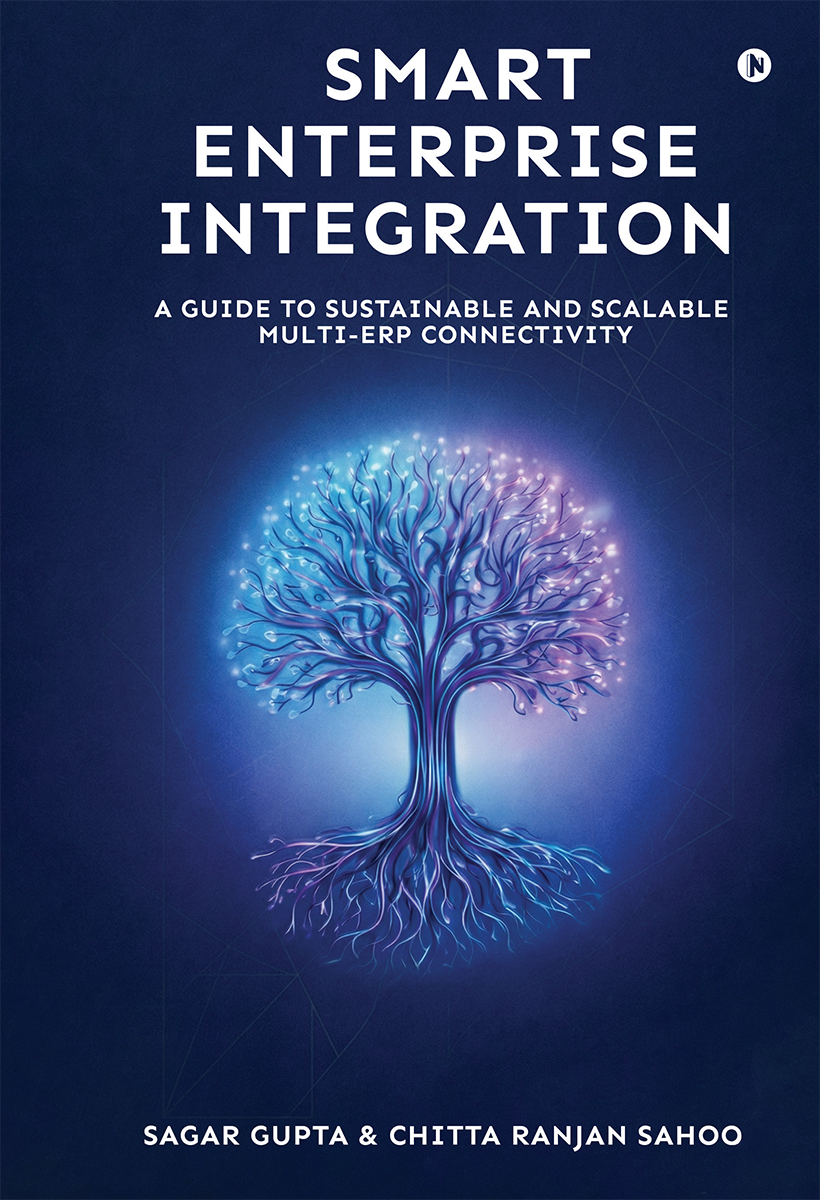
Integrating AI, Security, and Enterprise Systems for Tomorrow's Business
Modern enterprises operate on data, yet their ability to generate intelligence is constrained by siloed systems, duplicated pipelines, and costly integration processes. This book presents a practical architectural framework for integrating ERP systems such as SAP, Oracle, and Microsoft Dynamics using semantic models, hybrid storage, and selective AI-assisted techniques — delivering connected, discoverable data with high efficiency and a low carbon footprint.
Get in Touch
Interested in research collaboration, speaking engagements, or enterprise consulting? Reach out on any of the platforms below.
Email: sagar.om.gupta@gmail.com