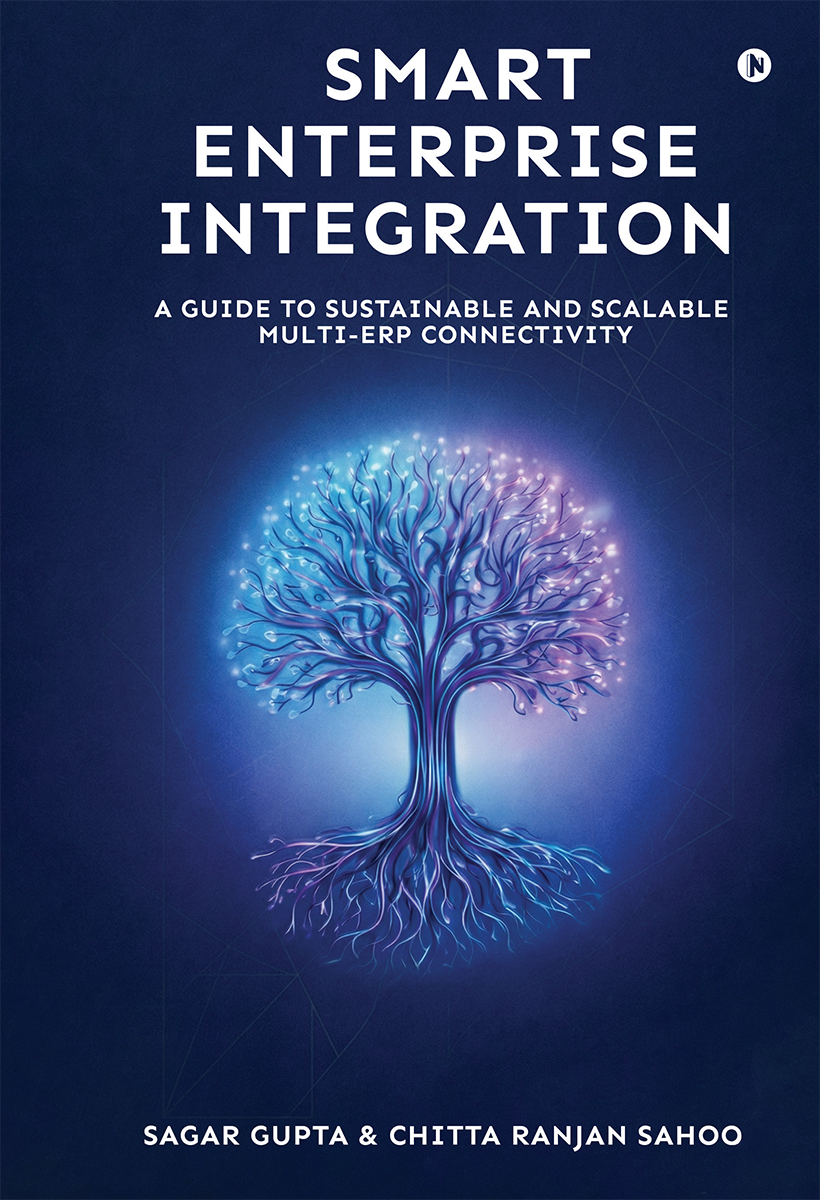
Sustainable Enterprise Integration
Integrating AI, Security, and Enterprise Systems for Tomorrow's Business
Modern enterprises operate on data, yet their ability to generate intelligence is constrained by siloed systems, duplicated pipelines, and costly integration processes. This book presents a practical architectural framework for integrating ERP systems such as SAP, Oracle, and Microsoft Dynamics using semantic models, hybrid storage, and selective AI-assisted techniques where automation adds genuine value. Rather than applying AI indiscriminately, the architecture leverages machine learning and large language models specifically for resolving semantic ambiguity, schema alignment, and knowledge discovery, while relying on deterministic, efficient mechanisms for core data movement and execution. Traditional ETL-heavy pipelines are replaced with knowledge graph–driven integration, adaptive ingestion, and low-carbon execution strategies, resulting in an enterprise information system that delivers connected, discoverable data with high efficiency. Through architectural designs, performance metrics, and real-world examples, the book translates research-driven concepts into actionable design principles for architects, engineers, and technology leaders seeking scalable, sustainable, and future-ready integration systems.
Key Features
Built for Modern Enterprise Success
Explore the essential technologies and practices covered in Sustainable Enterprise Integration—your guide to secure, scalable, and intelligent business transformation.
- Enterprise-scale AI Integration
-
Proven frameworks for integrating artificial intelligence across core business systems—delivering automation, predictive analytics, and smarter decision-making at scale.
- Security-centric Cloud Architecture
-
Best practices and blueprints for building secure, compliant, and resilient enterprise environments on the cloud—prioritizing data protection and threat mitigation.
- Practical Workflows & Case Studies
-
Step-by-step workflows and in-depth real-world case studies—equipping you to tackle enterprise integration challenges with practical, actionable solutions.
About the Author
Meet Sagar Gupta: Architecting Tomorrow's Enterprise
Sagar Gupta is a leading AI engineer, security practitioner, and cloud architect with over 14 years of experience in building transformative technology for enterprise environments. Renowned for designing secure, scalable systems, he specializes in integrating artificial intelligence with business-critical software and championing best practices in cybersecurity and cloud strategy.

Expertise & Contributions
With a career spanning global enterprises and high-growth startups, Sagar has architected solutions at the intersection of AI, security, and cloud computing. His portfolio includes:
- Leading enterprise-scale AI integrations, optimizing operational efficiency and business intelligence.
- Designing secure, compliant infrastructures for Fortune 500 organizations.
- Advancing cybersecurity practices in cloud-native environments.
- Mentoring engineers and contributing to open-source initiatives in the tech community.
Sagar is a frequent speaker at industry conferences and an advocate for ethical AI. His work is recognized for its blend of practical innovation, technical depth, and a steadfast commitment to security and scalability.
Sagar Gupta is an AI engineer, security practitioner, and cloud architect with extensive experience in enterprise technology, patents, and academic research. He has contributed to global enterprises, holds multiple US patents, and has published widely in top journals and conferences. He is recognized for his blend of practical innovation, technical depth, and commitment to security and scalable systems.
Buy Sustainable Enterprise Integration
Available worldwide. Choose your preferred platform below to purchase your copy and start unlocking next-generation strategies for enterprise technology, AI, and security.
About the Book
Book Spotlight
Sustainable Enterprise Integration
- AI-Driven Integration
- Explore frameworks for integrating advanced AI and automation into enterprise workflows, optimizing processes and decision-making.
- Security & Compliance
- Learn best practices for securing integrated systems, managing risk, and ensuring compliance across complex enterprise environments.
- Real-World Case Studies
- Analyze detailed case studies illustrating successful enterprise integration projects and practical solutions to common challenges.
Patents
Innovations by Sagar Gupta
Sagar Gupta holds several US patents in enterprise systems, AI integration, and secure cloud architectures. Below are selected patents as listed on his Google Scholar profile.
Graphical User Interface Command Pattern
US Patent No. 11,163,590
Systems, methods, and computer program products for graphical user interface command patterns. Receives a change request to a GUI, generates a discrete command, temporarily renders the change using local data, and in parallel retrieves backend data. Updates the interface based on any delta between local and backend data for real-time, robust UI updates.
Machine Learning Enabled Supplier Monitor
US Patent No. 11,727,334
A method using machine learning to monitor supplier risk and objectives affected by incidents. Automatically detects risk changes, analyzes costs and risks of replacing suppliers, and generates electronic documents to address enterprise needs. Enables proactive, data-driven supplier management.
Efficient Cloud Computing Resource Usage
US Patent No. 12,271,393
A unified data processing framework that enables efficient integration and processing of data from multiple source systems, each using different API specifications. The cloud processing layer parses, converts, and stores all incoming data in a universal, metadata-driven format within cloud storage. This allows for seamless, efficient retrieval and cross-referencing of information across diverse sources in response to user queries, optimizing cloud resource usage.
SELECTIVE VIRTUAL PRIVATE NETWORK
US Patent No. 12,432,180
A selective VPN system that establishes connections for specific application groups. Some applications' traffic is routed through a VPN, while others bypass it. The system uses a proxy to manage connections between client and VPN server, ensuring only selected network packets are securely tunneled, while others remain outside the VPN.
Academic Papers
Research & Publications by Sagar Gupta
Explore selected academic papers authored by Sagar Gupta, covering cutting-edge topics in enterprise integration, AI, and secure systems. These works have been published in leading journals and conferences in the field of computer science and information systems.
Selected Papers
- AI-Driven Anomaly Detection for Enhanced Business Process Orchestration Springer · Dec 28, 2025 In this paper, we demonstrate the application of Anomaly Detection using a multi-level Business Process Orchestration framework while considering the current state of technology and the business environment.
- Advancing Carbon-Efficient Software Development: A Sustainable Path Forward ACM · Jan 3, 2025 This paper proposes a PEFT (Parameter Efficient Fine-Tuning) Large Language Model (LLM) to assist developers in selecting libraries that are not only functional but also sustainable and secure. The solution includes creating detailed library profiles based on energy consumption, performance, and typical use cases. This is followed by a comparative analysis using Multi-Criteria Decision Analysis (MCDA) to rank libraries and provide real-time recommendations during the development process.
- Optimising the Carbon Footprint for Cloud Resources in a Cloud Environment IEEE · Jun 4, 2024 In this paper, we discuss an approach through which, by analysing the bills of popular service providers, we can propose suggestions to the IT admins to reduce their carbon footprints by providing them with projections so that IT admins can understand the impact of their cloud resources on the environment on a year-to-year basis.
- Open-Source Software Security Challenges and Policies for Cloud Enterprises EEE · Jan 19, 2023 The digital universe paused because these zero-day vulnerabilities exploded as an outcome. In this work, we will highlight challenges and propose an approach to help organisations protect the code base by safely consuming the Open Source.
- Command Pattern Design For Web Application Springer · Feb 20, 2020 Enabling client interfaces to handle such complex business processes is of great importance for some business scenarios, like in the case of collaborative user interface designing where data representation and data insertion are not the sole purpose of the Web applications. Adapting design patterns like “Command Pattern” can make the Web client smarter and more efficient.
- Single Sign-On Beyond Corporate Boundaries IEEE · Apr 30, 2019 This paper discusses the idea of creating a cloud-based single sign-on platform that can be used to seamlessly connect any device, be it personal or professional, to the corporate network without worrying about the data security and IP infringement issues. This brings new definition to the Bring-Your-Own-Device (BYOD) policies adopted by many organizations.
Frequently asked questions
-
The book explores the integration of AI, automation, and security practices into large-scale enterprise systems. It covers architectures for sustainable digital transformation, best practices for secure AI deployments, real-world case studies, and frameworks for aligning technology with business objectives.
-
The book is designed for technical professionals, architects, IT leaders, and enterprise strategists looking to successfully integrate AI and automation in secure, scalable environments. It is also valuable for students and researchers in enterprise technology and digital transformation fields.
-
The book balances conceptual frameworks with practical technical detail. Readers will find architectural diagrams, code samples, and real-world implementation guidance, making it suitable for both decision makers and hands-on engineers.
-
It provides actionable strategies for integrating AI technologies into legacy and modern architectures, with a focus on security and compliance. The book discusses threat models, secure deployment patterns, and ways to ensure responsible AI adoption at scale.
-
Absolutely. The book draws on practical case studies and proven methodologies to help technical leaders and teams translate theory into actionable solutions for enterprise-scale AI and integration projects.